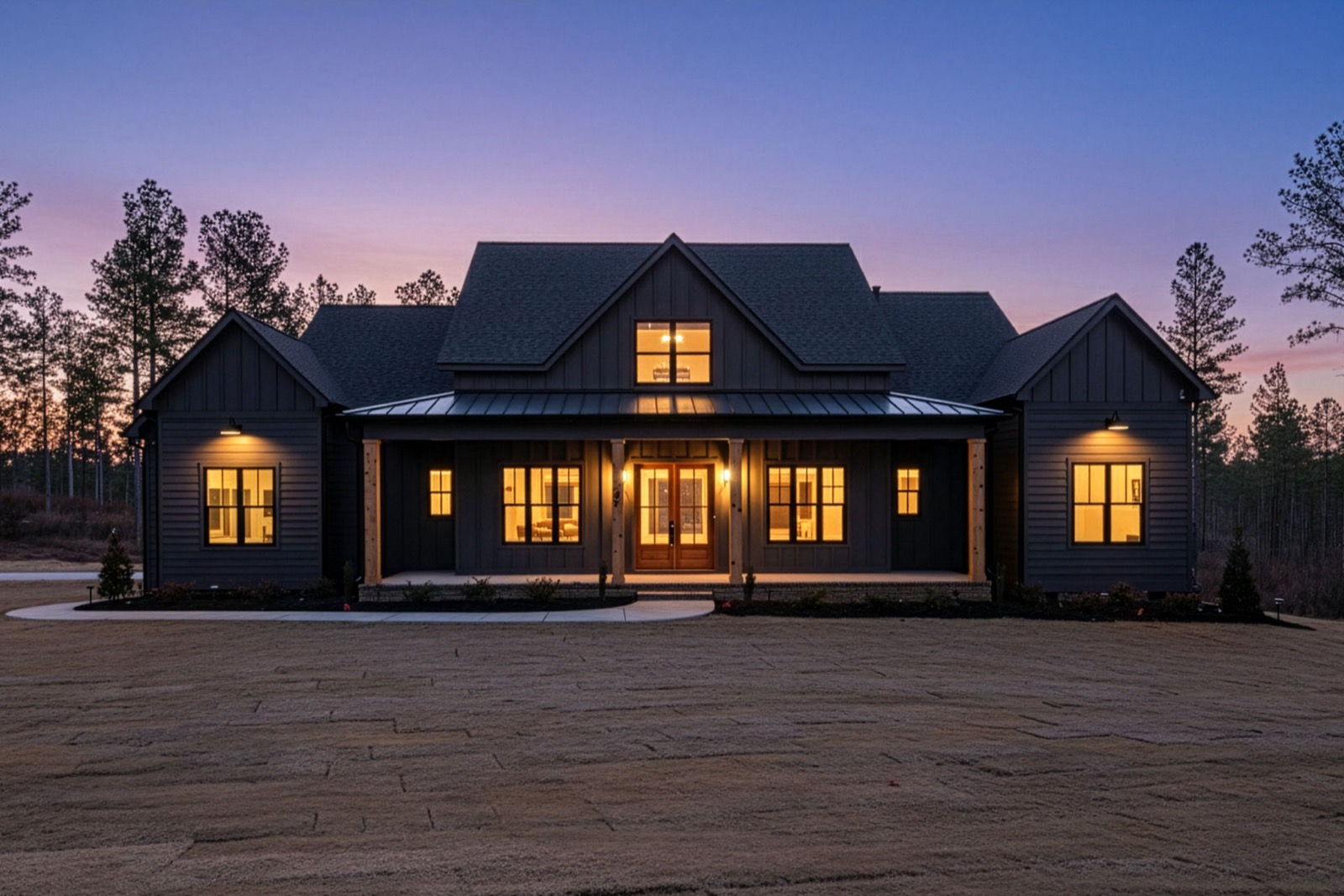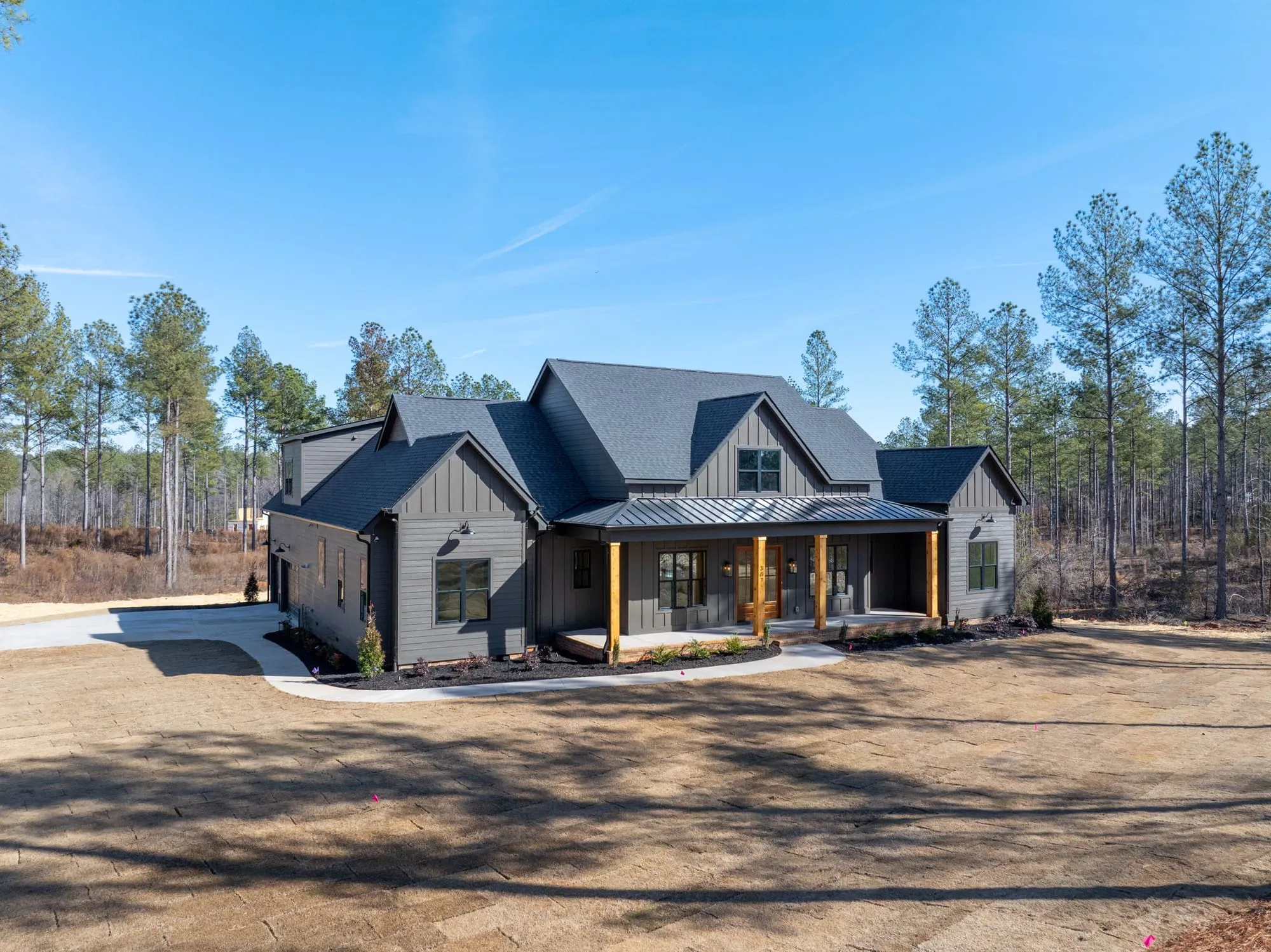
“Custom home” and “fixed price” sound like they shouldn’t go together. Custom implies open-ended — pick anything, change your mind halfway through, pay whatever it ends up costing. That reputation is earned; it’s also exactly the problem a fixed-price contract is built to solve.
The problem with “estimates”
Most of the horror stories people trade about building a custom home start the same way: a number on paper that quietly stopped being the number somewhere around framing. Change orders stack up, allowances run short, and by the time the home is finished the final invoice looks nothing like the one that was signed. None of that is necessarily dishonest — a lot of it is just how the industry has traditionally priced open-ended scope. But it puts the risk of every surprise on the homeowner, one line item at a time.
A fixed-price contract flips that. The price agreed to at signing is the price paid at closing, for the scope defined in that contract. The builder — not the client — carries the risk of a subcontractor bid coming in high, a material cost creeping up, or a schedule running longer than planned.
What has to be true for a fixed price to hold
A fixed price only means something if the plans, finishes, and allowances behind it are actually locked before construction starts. That’s the part that gets skipped when a number gets thrown out too early. Before Trivium commits to a number, the scope behind it has to be nailed down:
- Plans are finalized, not conceptual — the design phase happens before the price is set, not alongside construction.
- Selections are made up front — flooring, fixtures, cabinetry, and finishes are chosen before the contract is signed, not decided room by room as the build goes.
- Allowances are realistic, not placeholders set low to make an initial number look better than it will end up being.
- The site is understood — grading, utilities, and any land-specific factors are accounted for before ground is broken, not discovered mid-build.
Skip any of those and “fixed price” becomes a starting point instead of a promise.
Why we build it this way
Trivium is locally owned, and there’s no general contractor layer standing between the client and the person actually responsible for the build. That matters here specifically: a fixed-price contract only holds up if the builder is willing to eat the occasional bad bid or slow supplier instead of passing it along. Working directly with the owner, on a contract with a committed handover date, is what makes that trade sustainable rather than a one-time promise made to close a sale.
None of that eliminates every conversation about cost during a build — a homeowner changing their mind about a feature after the contract is signed is still a change order, and always will be, everywhere. What a real fixed-price contract eliminates is the surprise. The number at the end matches the number at the start, because the scope that number was built on didn’t move either.